

Overview
Rewards was the next major expansion of Simpplr's Employee Recognition add-on. After launching peer recognition and recurring awards, Simpplr needed to add a meaningful way for employees to attach value to recognition — without reducing appreciation to a transaction or creating an unmanageable finance process for administrators.
Over nine months, as the sole product designer, I led product design for the general-availability release of Rewards. The work covered the full system: enabling the add-on, configuring budgets and allowances, setting location-based point values, giving and receiving points, redeeming them in a rewards store, and understanding programme activity through reporting.
The opportunity
Recognition had already made appreciation visible inside the digital workplace. But for many organisations, recognition also needed to carry tangible value: a way to thank a colleague with points they could redeem for a meaningful reward.
That introduced a much more complex set of needs. Administrators needed to control programme spend, distribute gifting capacity fairly, and work across locations. Employees needed to be aware of rewards, understand how many points they could give, what they had received and how to use them.
The opportunity was not simply to add a reward catalogue. It was to create a reliable operating model for rewards inside an existing recognition product.
The approach
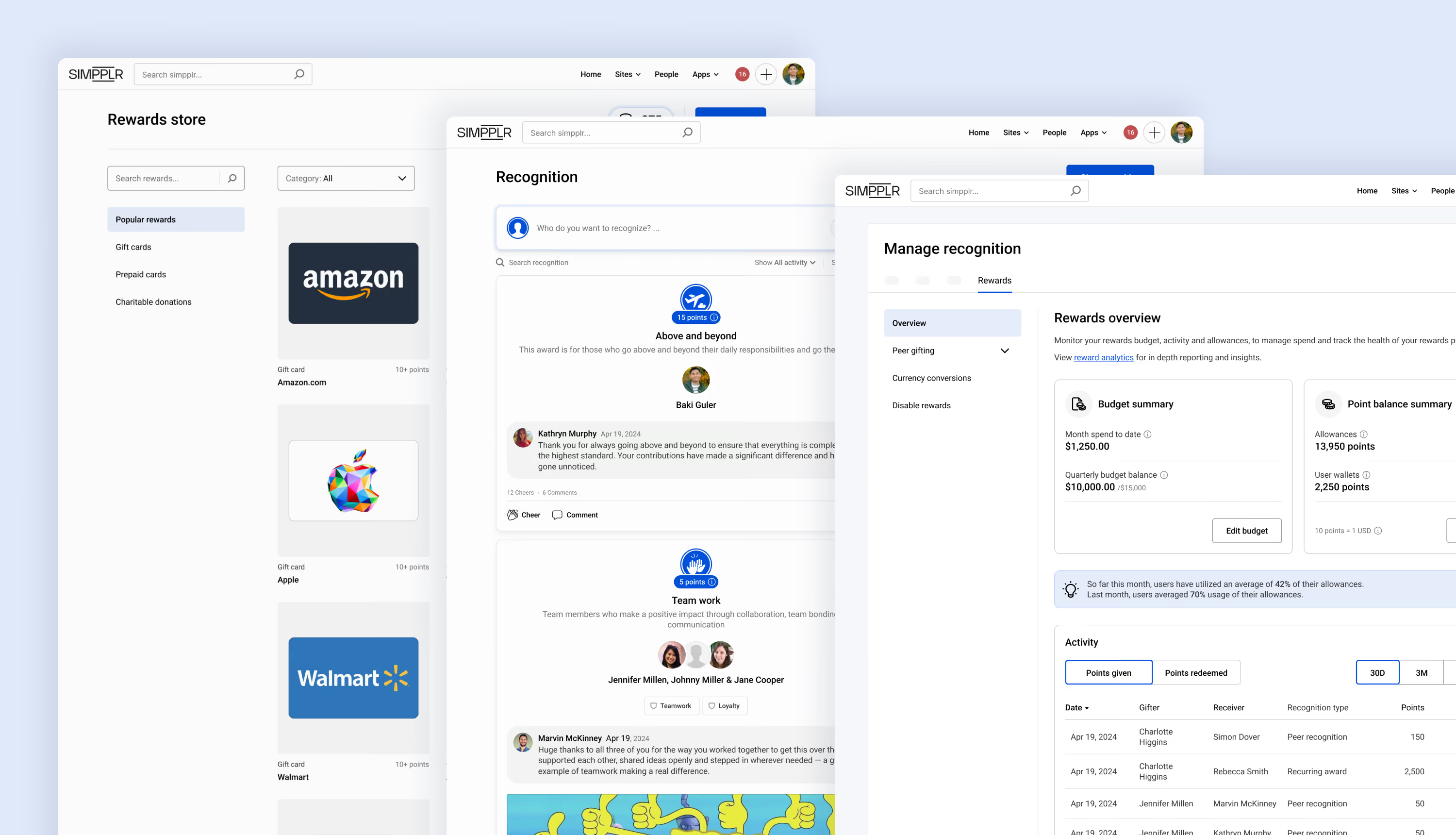
I designed Rewards around four connected needs: helping administrators set up and fund the programme with confidence; allocating fair, predictable allowances; making points simple to give, receive, and understand within recognition; and providing a transparent redemption experience, backed by reporting on programme activity.
In order to meet the GA deadline, I made deliberate scope decisions in agreement with the PM. The initial release launched points on peer recognition first, which could be redeemed for virtual gift cards or charitable donations. Points in recurring awards, physical gifts and additional reward types were planned for later releases.
Billing constraints made budgets a planning and monitoring tool at GA rather than a hard spend limit. Organisations were invoiced monthly for redeemed points — an approach that kept payments in-house and avoided the legal and compliance complexity of managing pre-funded balances. Together, these balanced trade-offs allowed the team to ship a coherent end-to-end foundation, with greater flexibility planned as follow-on work.
Designing a rewards programme administrators could run with confidence
Setting up Rewards involved several connected decisions, so I designed the administration experience as a guided flow rather than exposing every control at once.
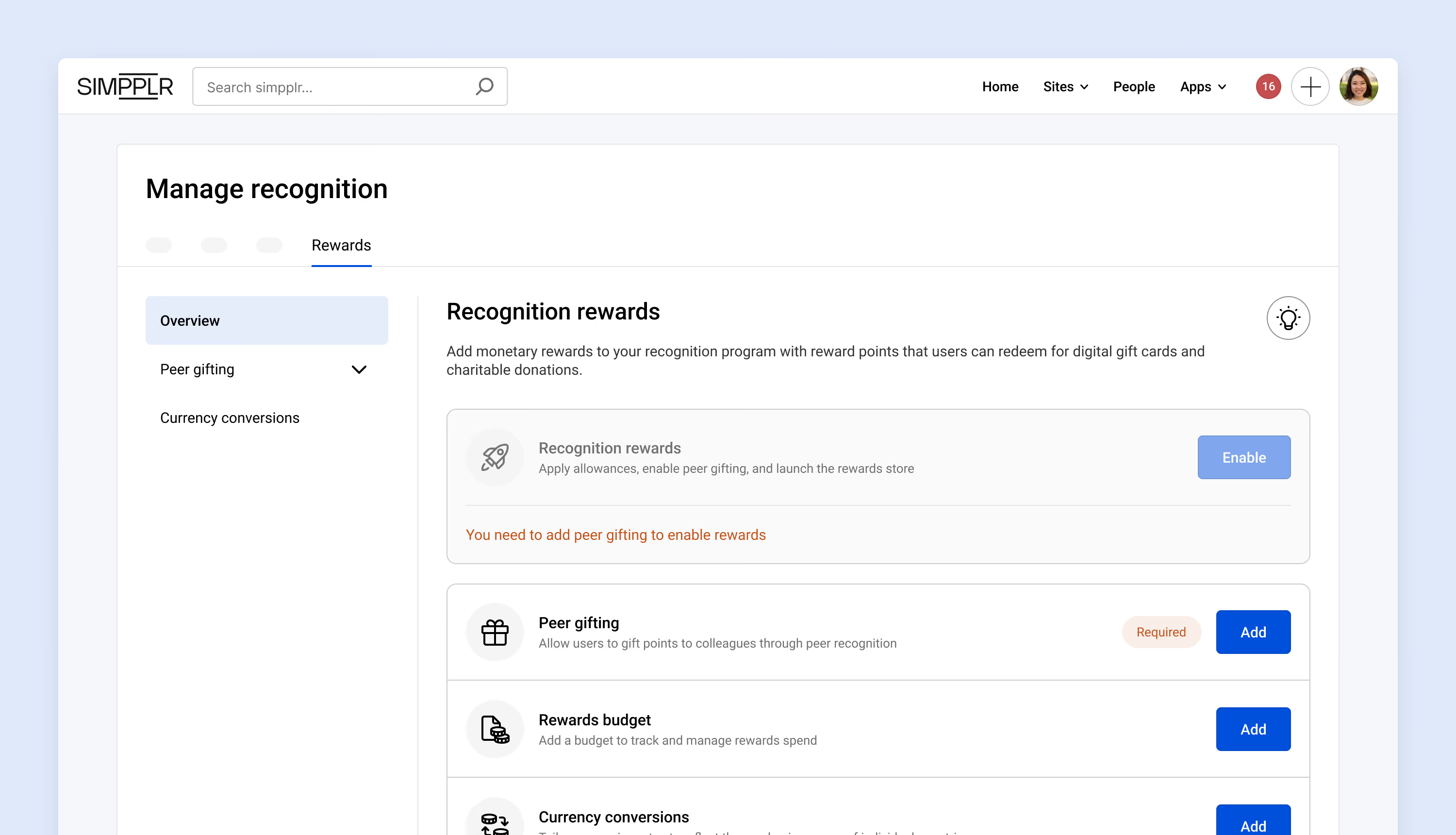
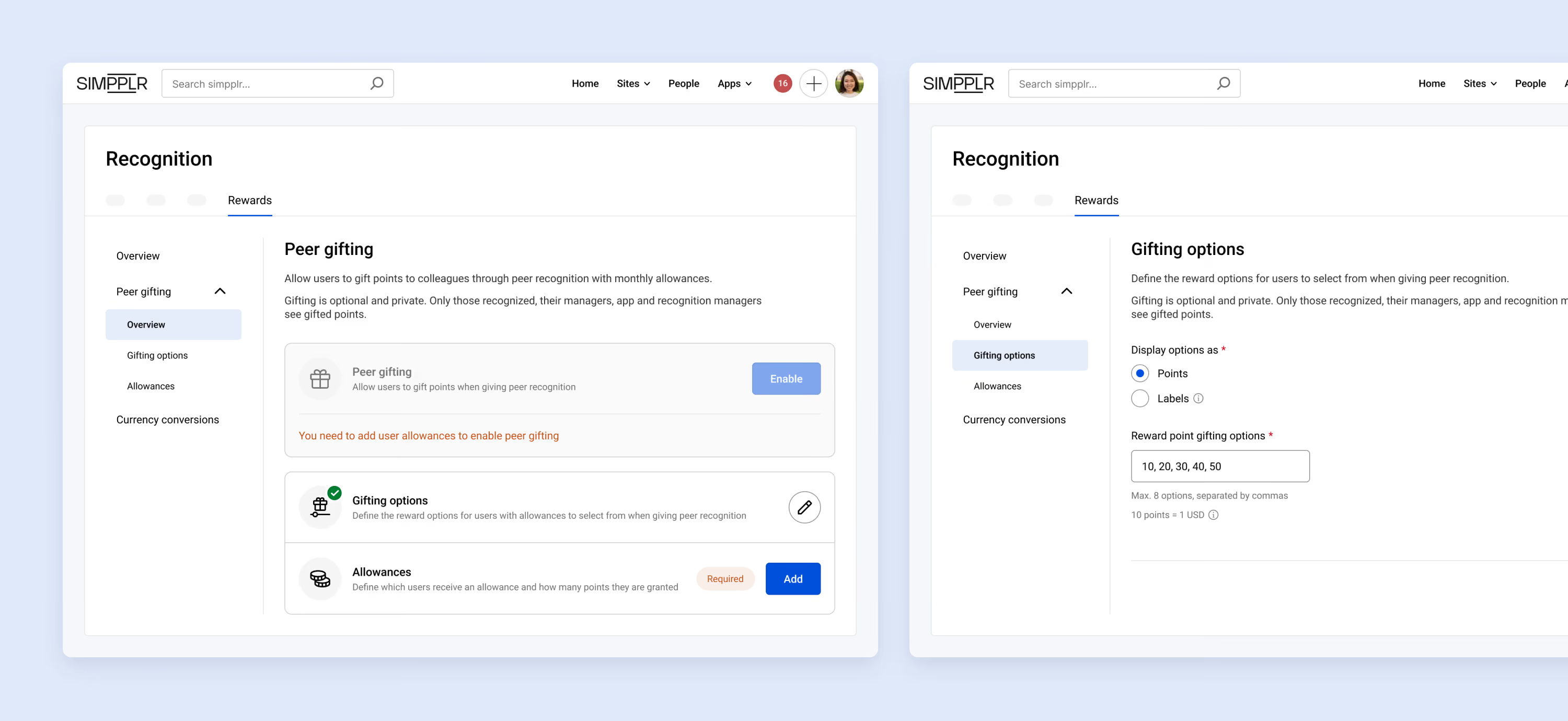
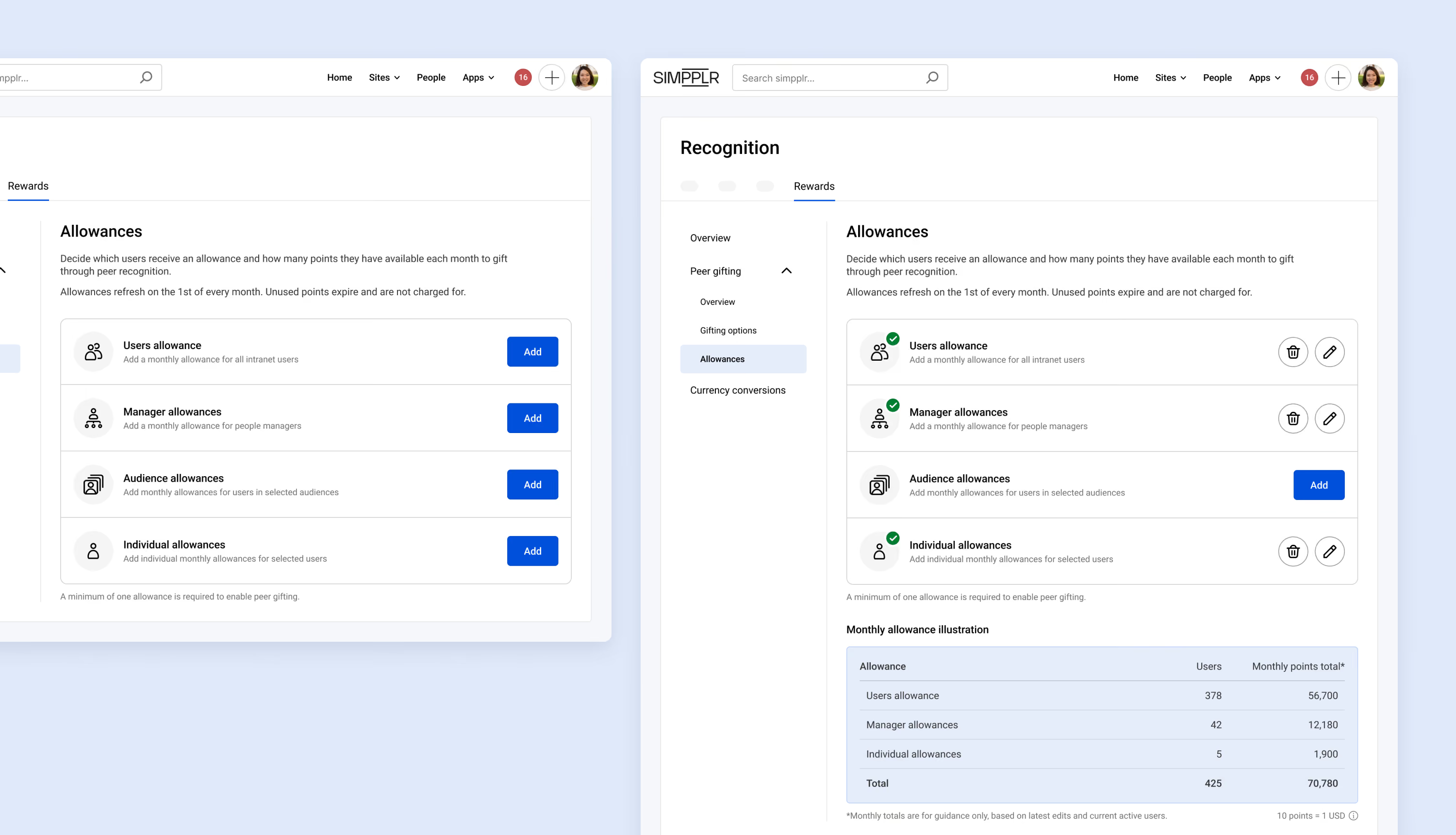
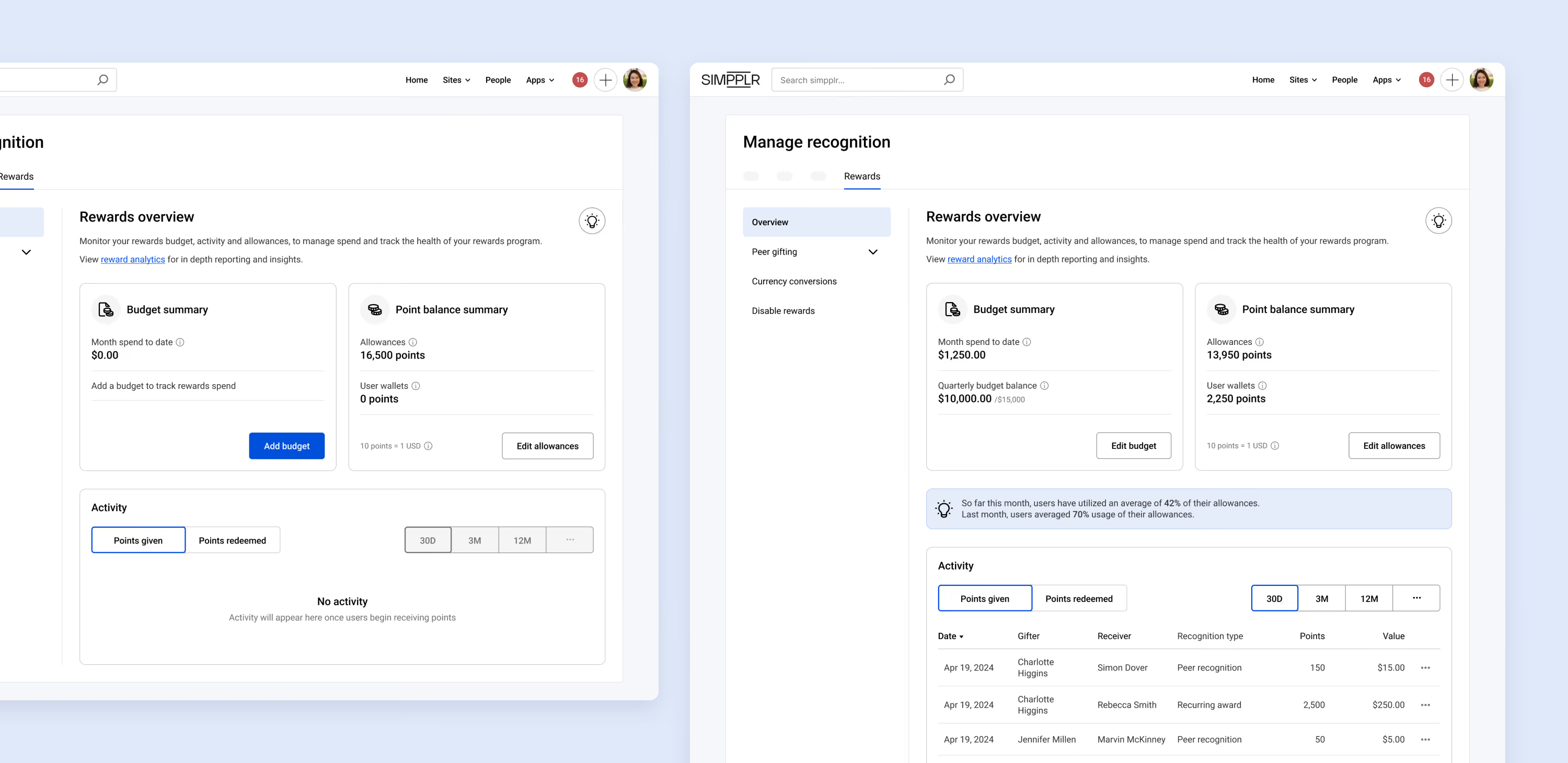
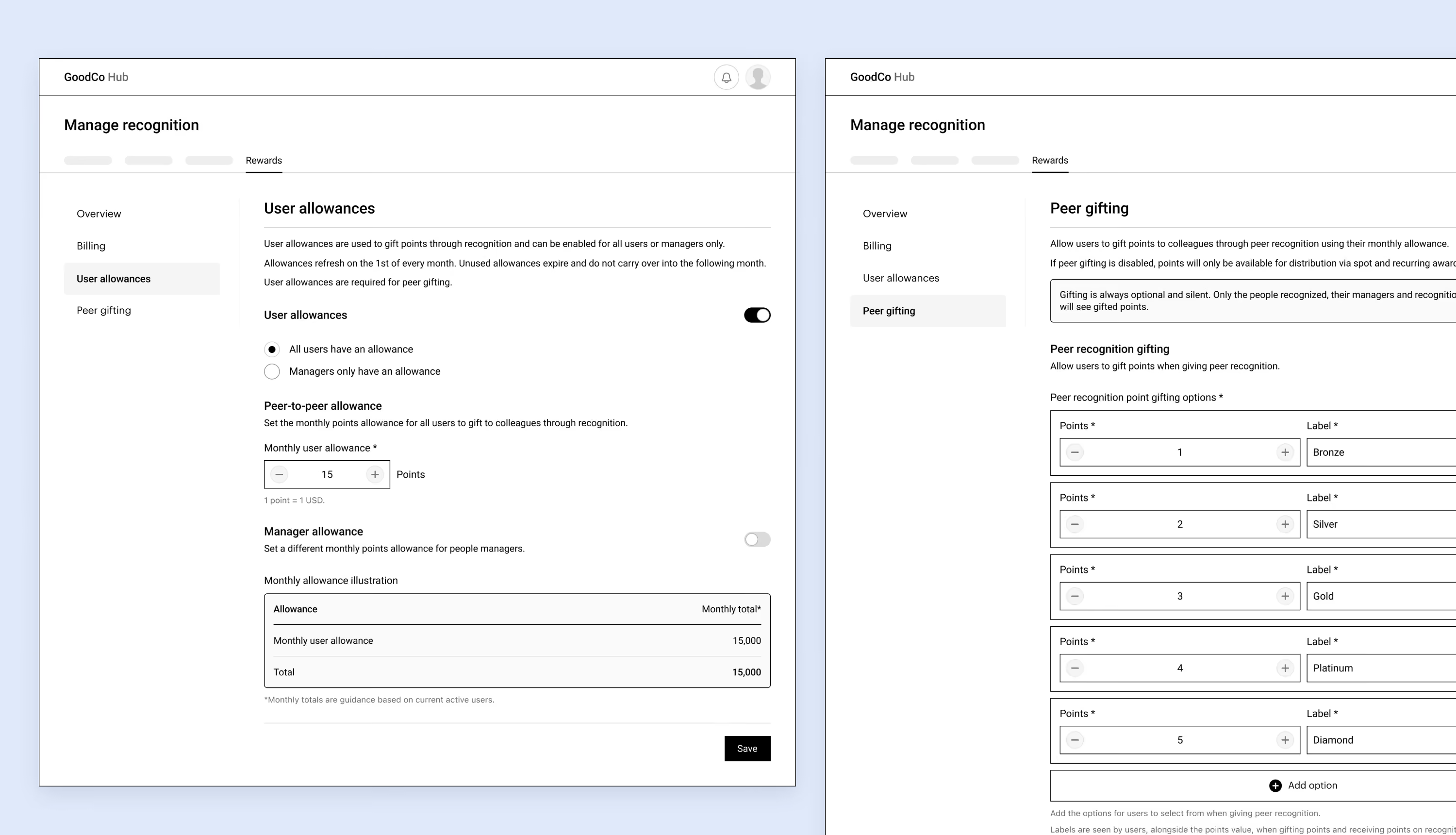
Allowances set how many points an employee can give through recognition each month. The model needed to support both simple programmes and varied organisational structures: administrators could give everyone the same monthly amount, reserve a larger amount for managers, target selected audiences, or create exceptions individuals. Configuration was designed to allow full flexibility, while a monthly-allocation preview showed how their rules would affect programme spend across the workforce.
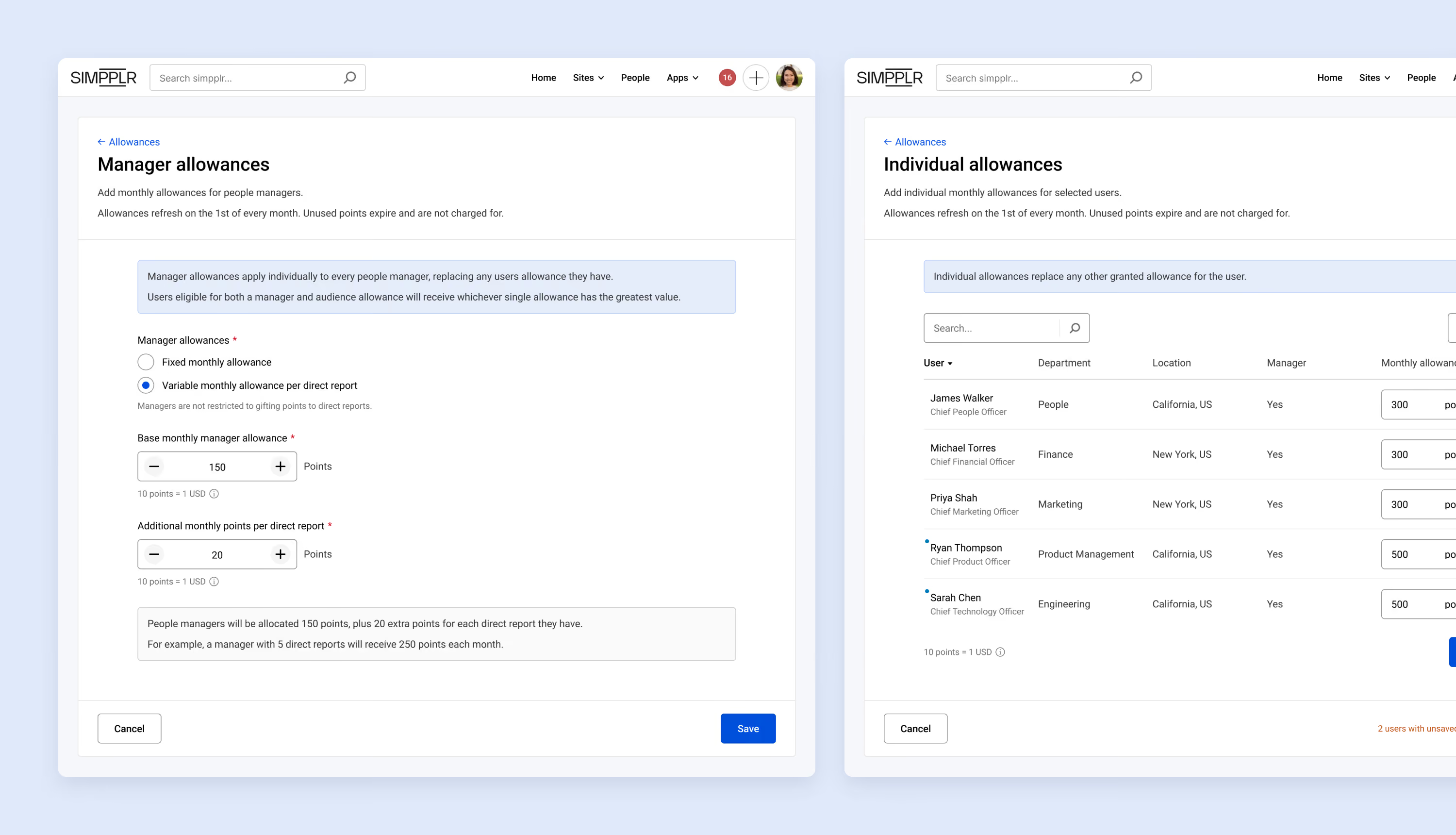
Currency conversions allowed administrators tailor the value of reward points across locations to reflect the purchasing power of individual currencies, ensuring a fair representation of value in their rewards programme.
Budgets gave administrators a simple way to plan and monitor programme spend. I designed the setup flow around the essentials: annual or quarterly cadence, budget amount and financial-year start. Once live, a budget summary showed spend to date and the remaining balance, while alerts warned administrators as they neared their limit.
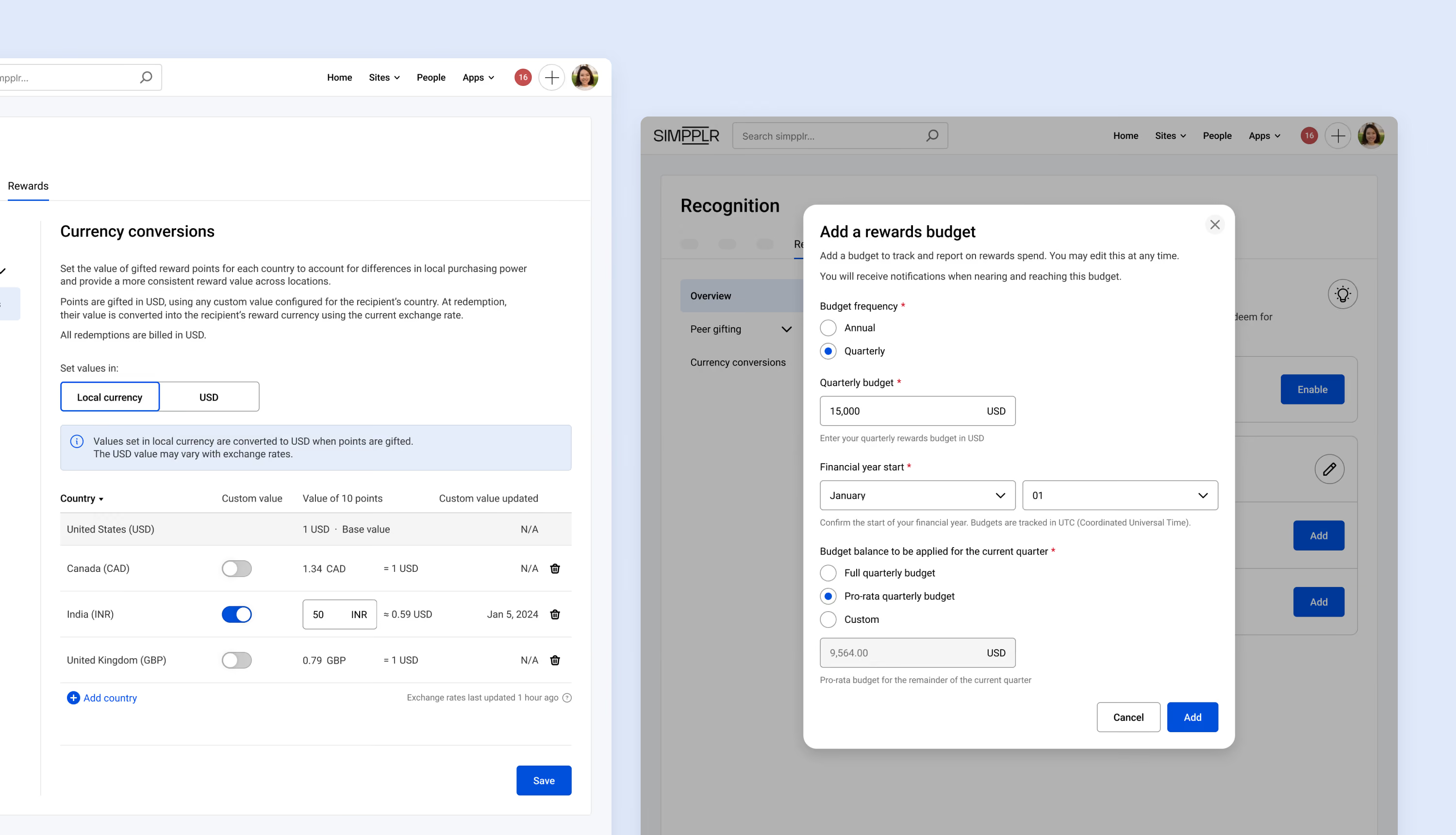
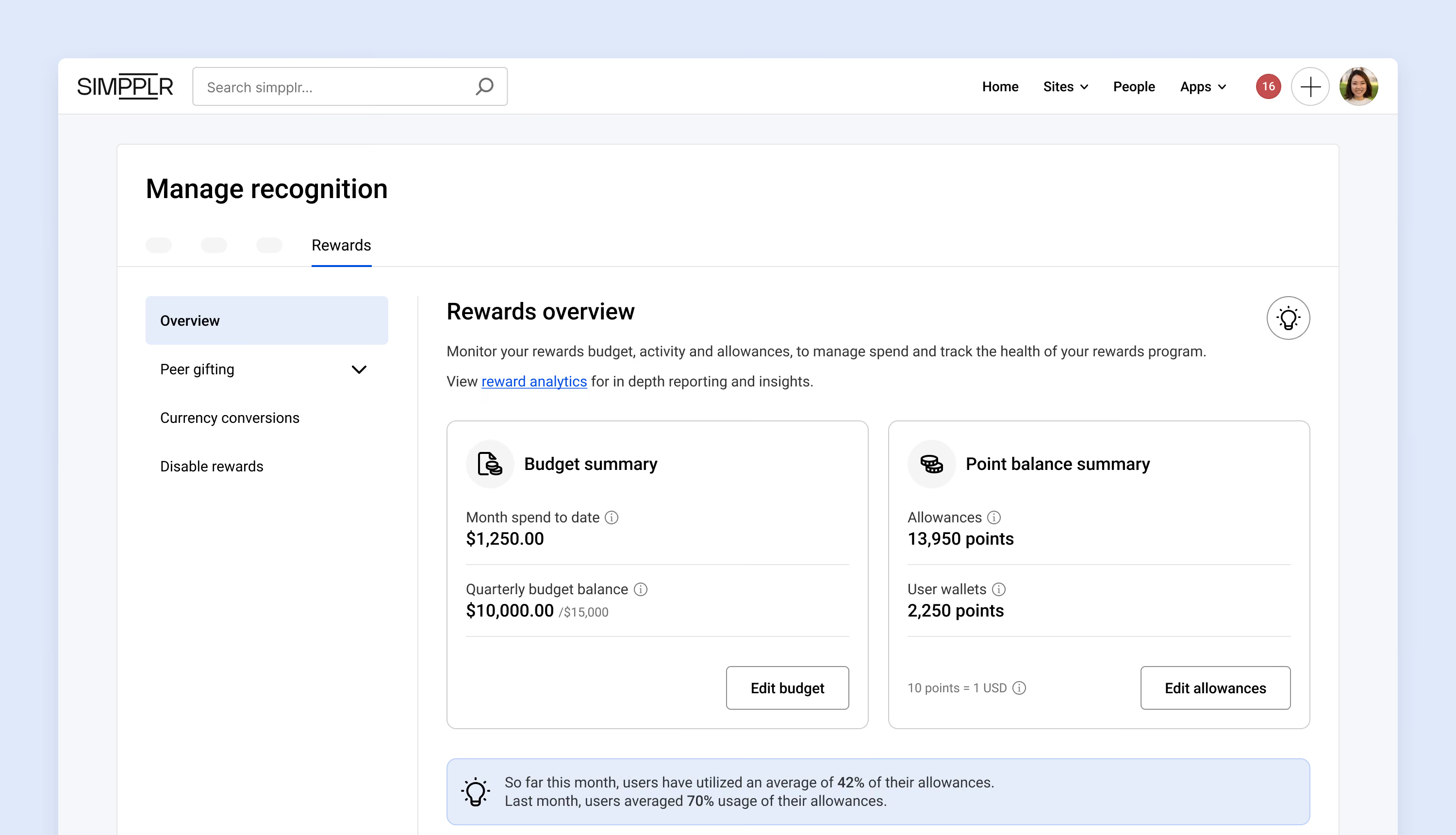
Once Rewards was live, the dashboard gave administrators a clear view of programme health. It brought together spend and remaining budget, allocated allowances and points held in employee wallets, plus a read on allowance utilisation. A recent-activity view showed points given and redeemed over time, with direct paths to adjust budgets or allowances and access deeper analytics when needed.
Designing the employee experience
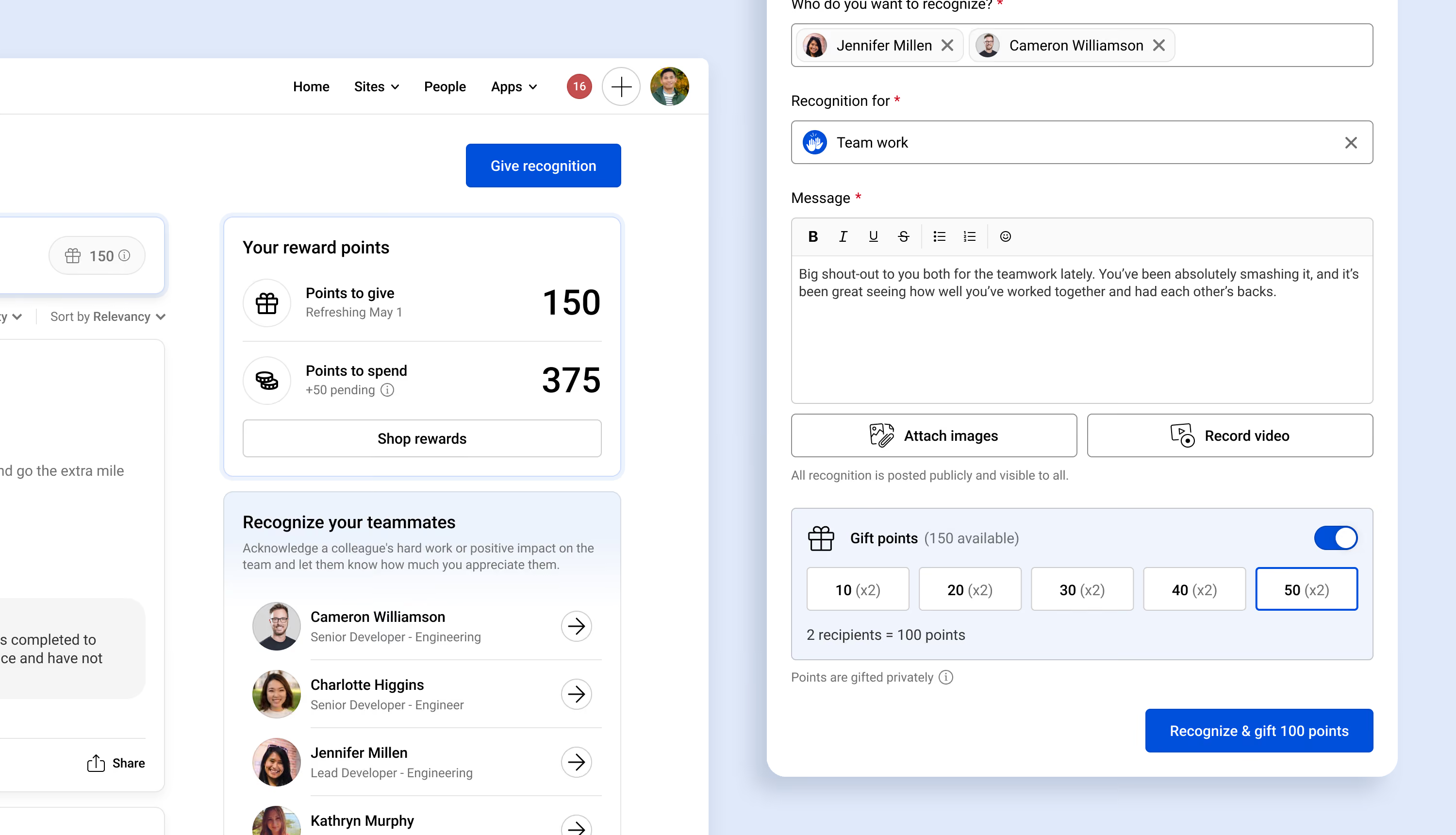
To make rewards part of everyday recognition, employees needed a clear view of the points that they could give, and to be prompted to do so. The Recognition hub and profile pages kept available points and the next refresh date visible, while email notifications marked the start of a new allowance period and reminded employees to use remaining points before they expired. Together, these touchpoints kept allowances top of mind and created timely opportunities to recognise colleagues.

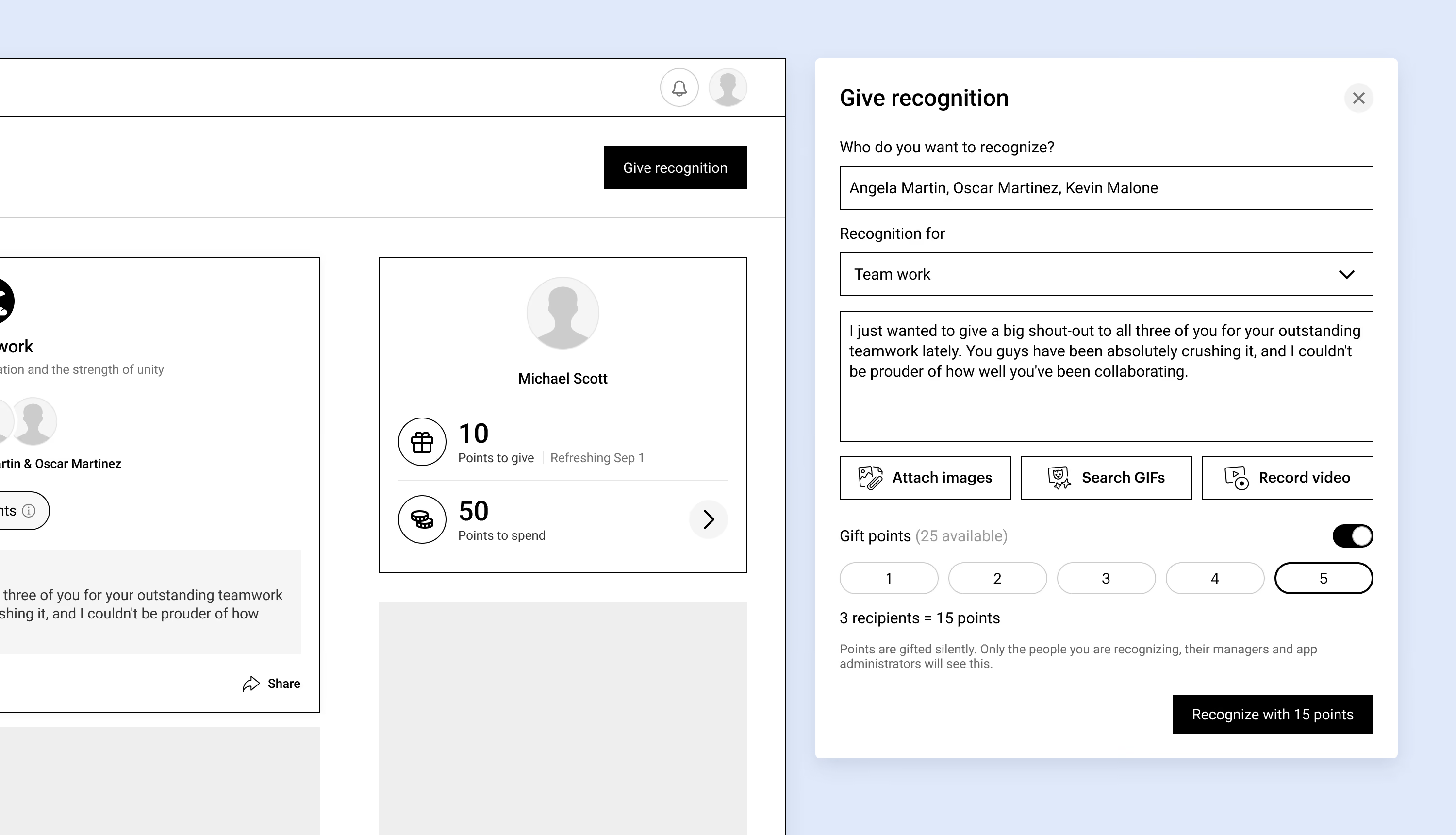
Giving points happened within peer recognition, where the primary task was thanking someone. I designed rewards as an optional enhancement to that moment: they could make recognition more meaningful, but their absence should never prevent someone from giving it.
The flow calculated eligible gifting options from the sender’s available balance and the number of recipients. Rather than asking employees to work out what they could give, it showed only valid amounts and explained the remaining balance in context — keeping the interaction quick and focused on the recognition itself.
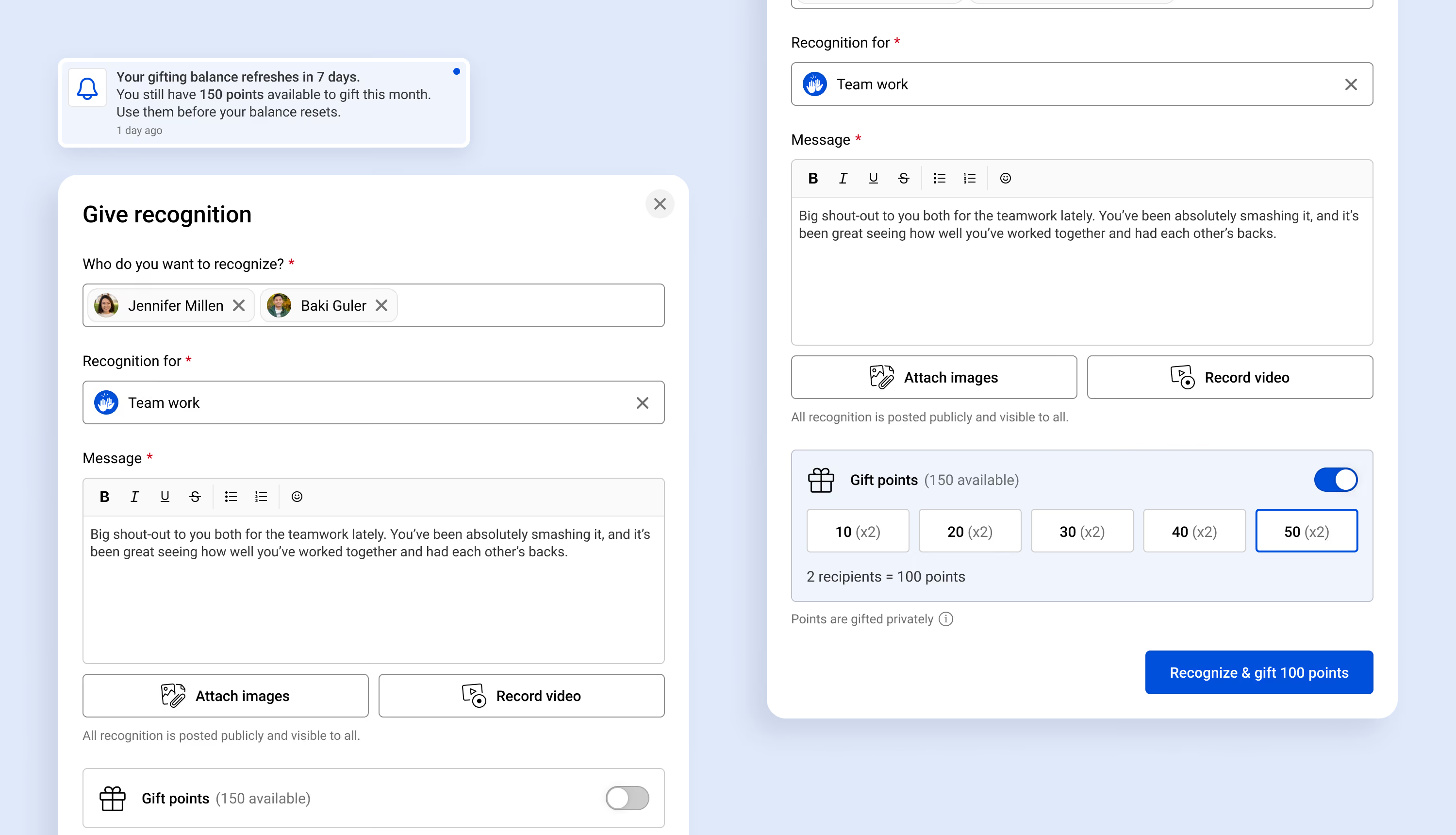
To prevent points from becoming a public comparison, or making people hesitant to gift, the value of each gift was private, visible only to the sender, recipient, their direct manager, and administrators.
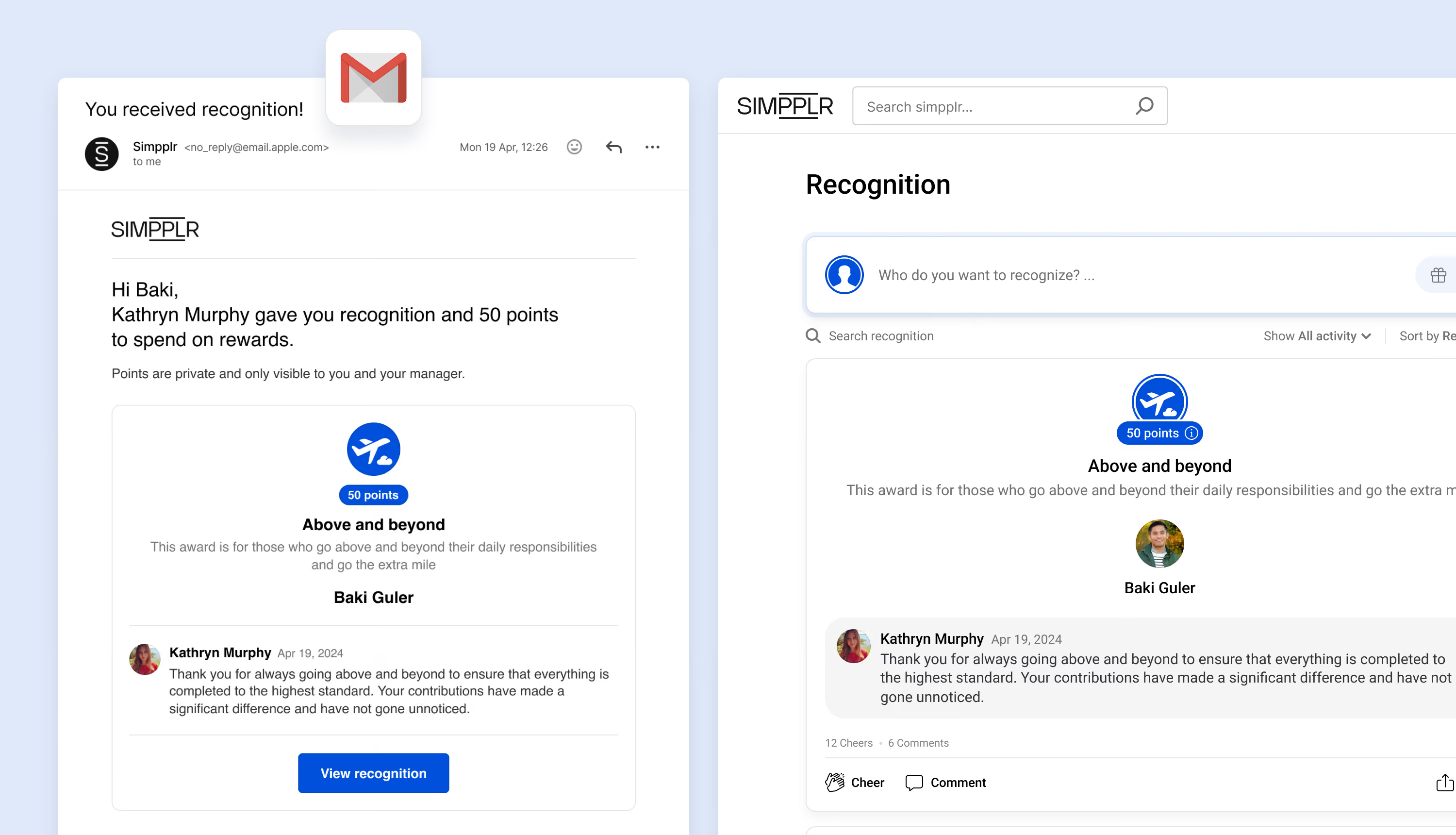
Receiving points needed to feel as considered as giving them. Employees received notifications celebrating the recognition and points a colleague had gifted them, followed by monthly reminders of points still available to spend. A prominent balance in the Recognition hub kept that value visible between reminders, distinguishing points to spend from points to give and providing a direct route to the rewards store.
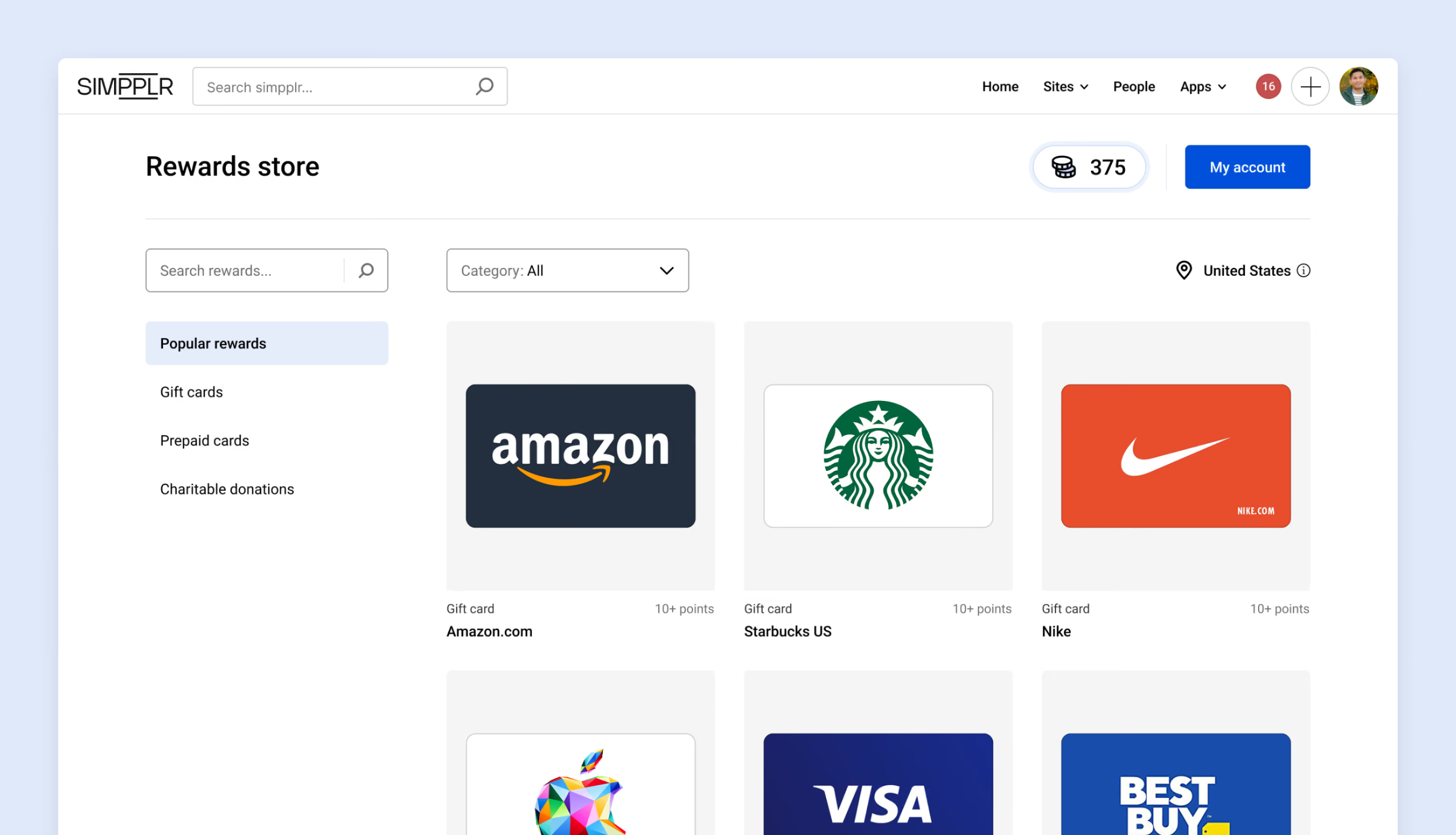
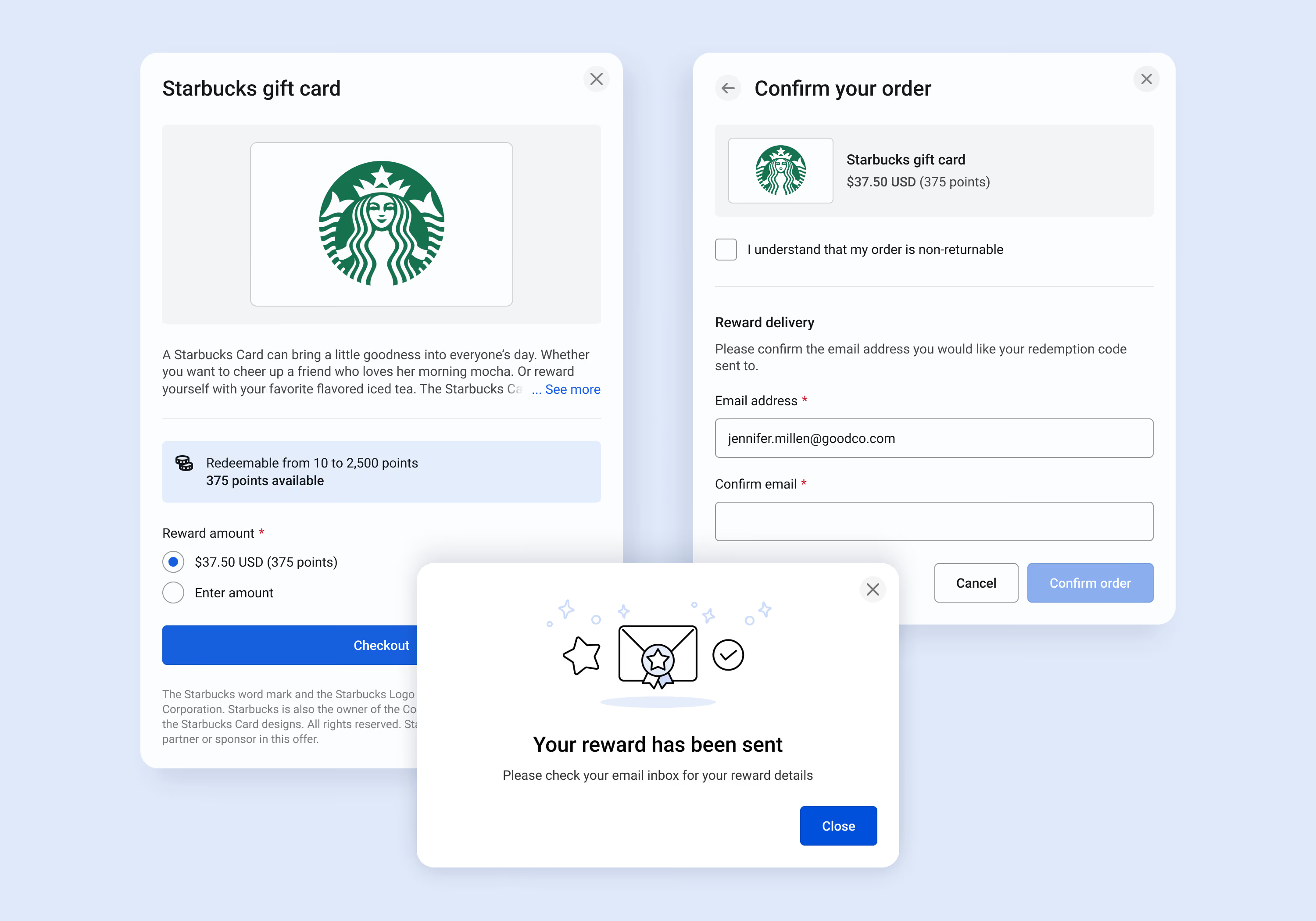
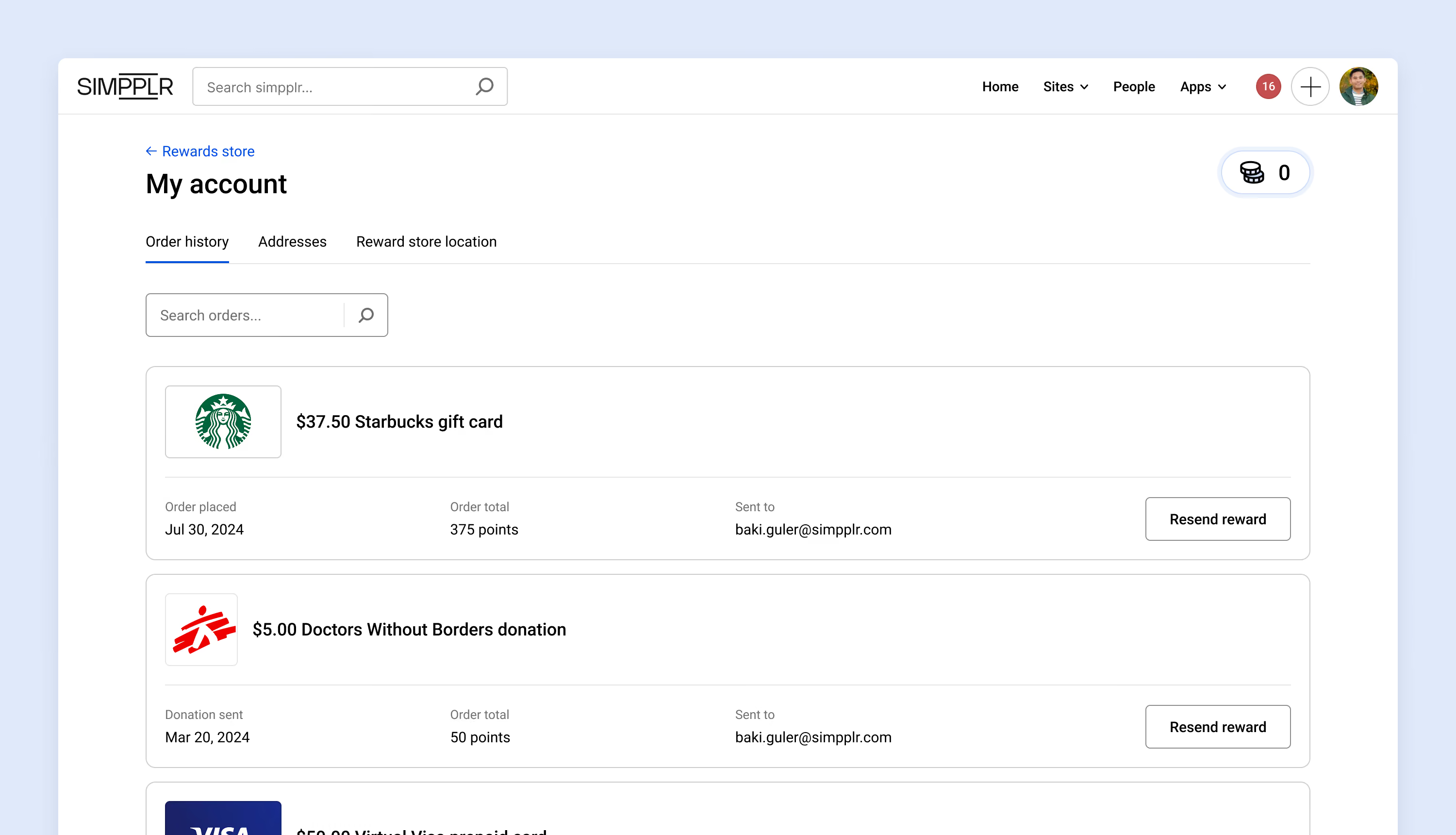
Redemption was the moment recognition became tangible. At launch, employees could choose virtual gift cards, pre-paid cards, or charitable donations. Some rewards were available at fixed increments, while others allowed employees to choose a flexible value. I designed a consistent redemption experience across these variations, so employees could understand their options and point cost before confirming.
Testing and iteration
I tested an early iteration of the peer-gifting administration experience in an unmoderated cognitive walkthrough with HR and employee-benefits professionals.
The research confirmed that participants could define peer-gifting options and understood the purpose of user allowances. Participants responded positively to the simplicity of the layout and explanatory content, but the study also identified improvements that shaped the product and its follow-on work:
- Allowance flexibility mattered at scale. A need to set allowances by job role highlighted the importance of audience-based configuration and more flexible allocation rules.
- Enablement needed to set expectations. The entry point needed to make the setup that followed clearer, with the process broken into focused steps to reduce cognitive load.
- Simpler point-label language. Custom labels needed clearer framing and were viewed as a nice to have, rather than a GA requirement.
I also tested peer gifting within the recognition flow. All participants understood the purpose of reward points and their available balance, then successfully added points to a recognition — validating that rewards could enhance the moment without getting in its way.
Outcome
Rewards contributed approximately $1M ARR in its first year and established the core models for budgets, allowances, point value, balances, and redemption. More importantly, it gave Simpplr a credible foundation for a full Recognition & Rewards offering — one that could grow into stronger controls and more global flexibility without reworking the employee experience at its centre.
