Crash Override. Build observability.

From commit to prod: making the software delivery lifecycle visible.

Designing an explorable build-intelligence model that connected source changes, software artefacts, deployments, and runtime observations into one evidence-backed view of delivery.

Role
Product Designer
Team
1 Product Manager,
4 Engineers
Year
2025

Overview

Crash Override connects source control, CI/CD, and cloud-infrastructure evidence to explain how software moves from code to production. I designed and evolved Build Intelligence from an early Build detail page into an explorable model of that lifecycle, letting users investigate from source to runtime or trace a running service back to the build that produced it.

Full case study coming soon. In the meantime, here’s a selection of the design work.

Build visualisation — An interactive visualisation that makes complex build relationships easy to explore, from source and inputs through to artefact and runtime.
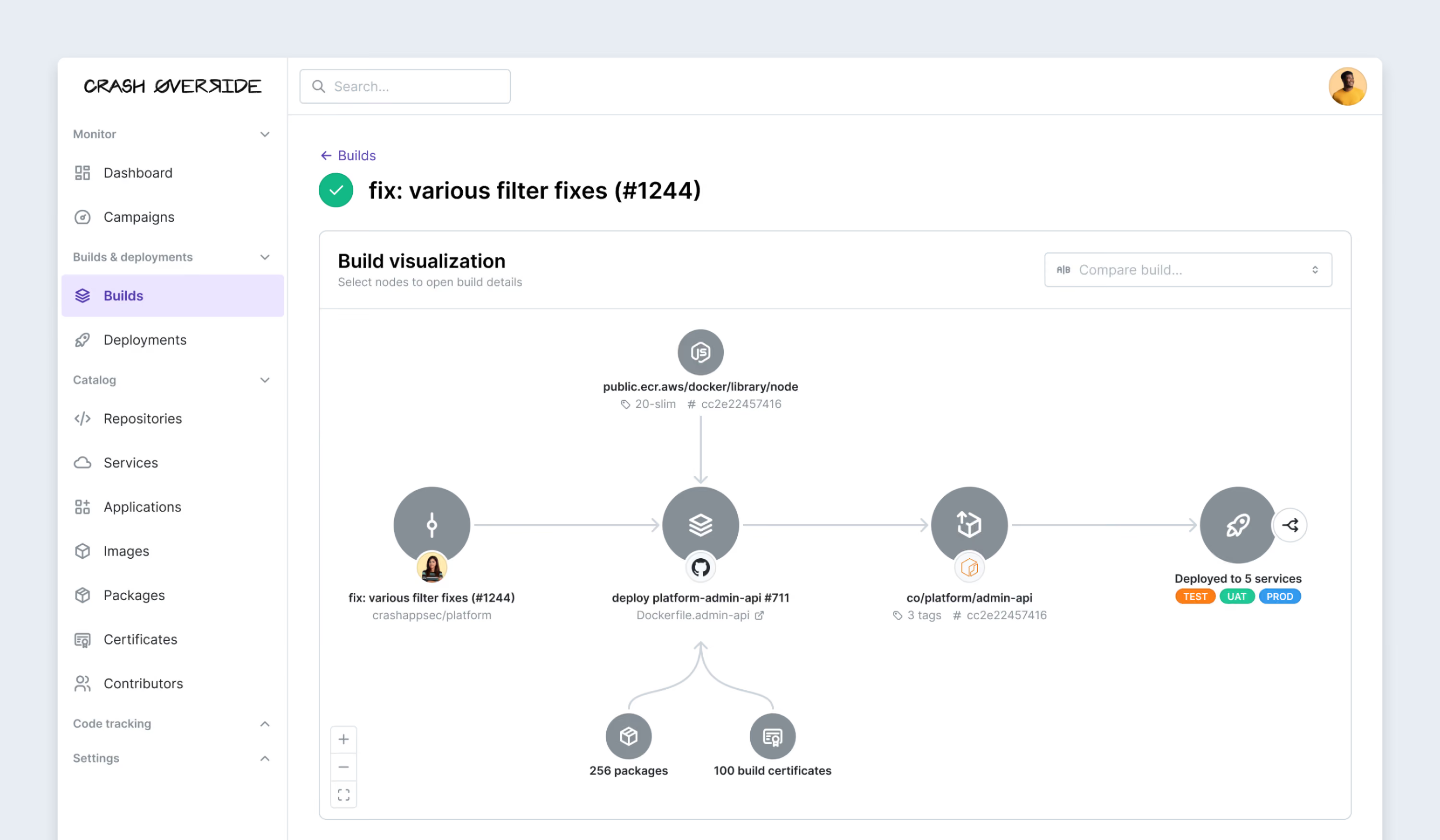
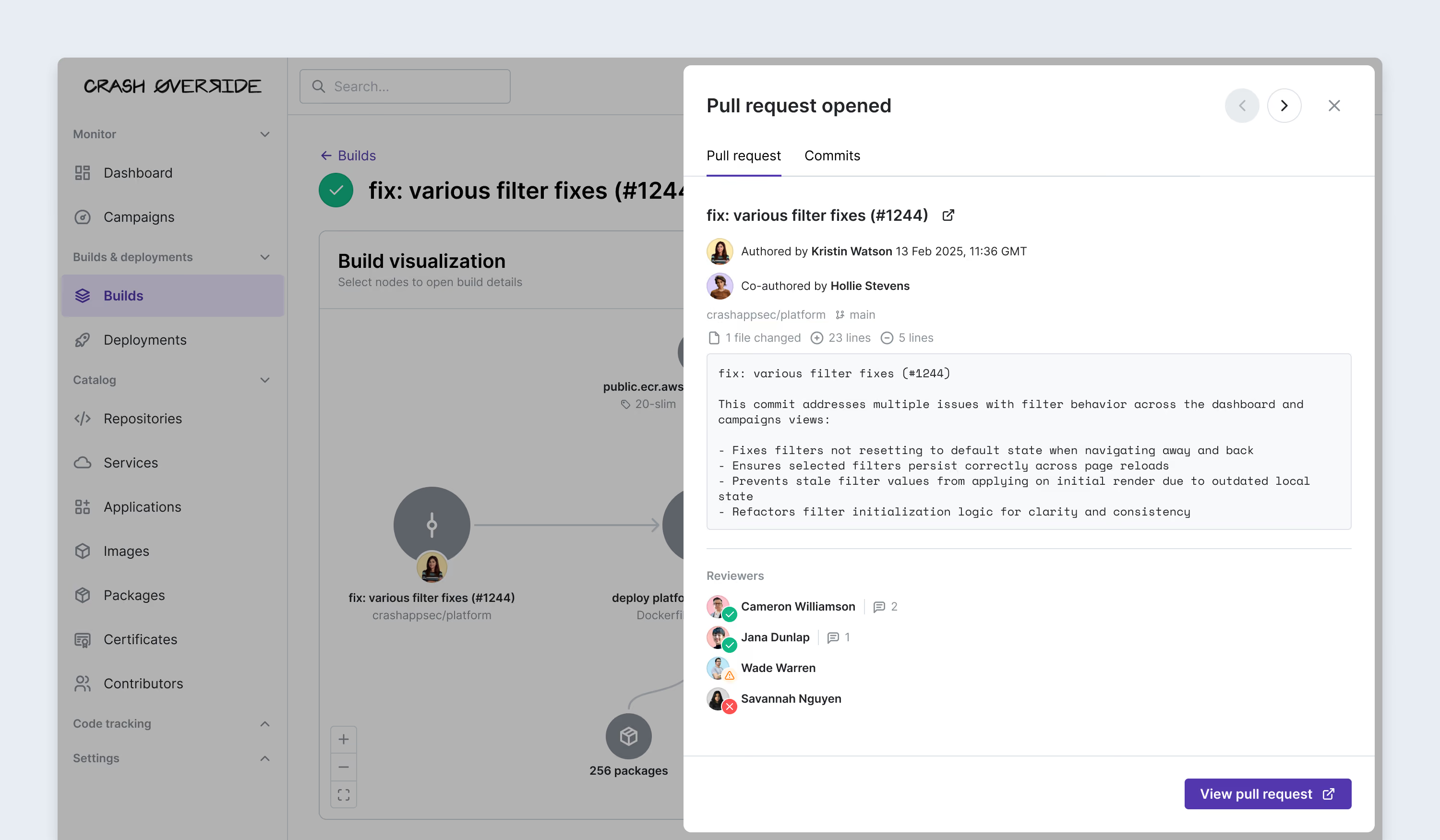
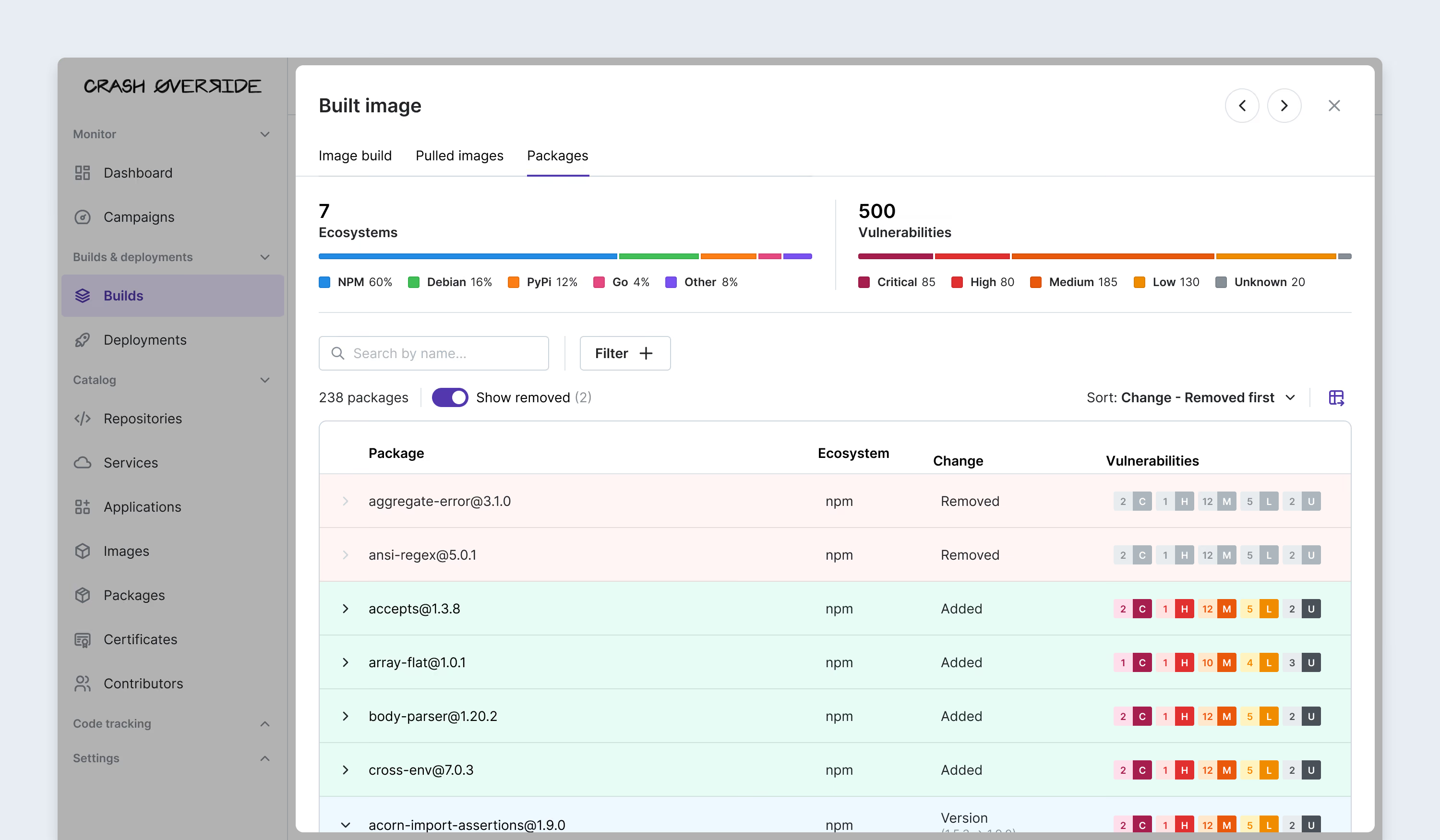
Crash Override Builds page showing a successful build flowing from source commit to container image and deployment across test, UAT, and production services.Pull-request details panel listing authors, filter-related changes, and reviewer approval statuses.Package inventory for a built image, showing ecosystem and vulnerability summaries and a table of added, removed, and changed packages.

Build comparison — Compare builds to quickly understand what changed across packages, base images, artefacts, configuration and other security-relevant properties.
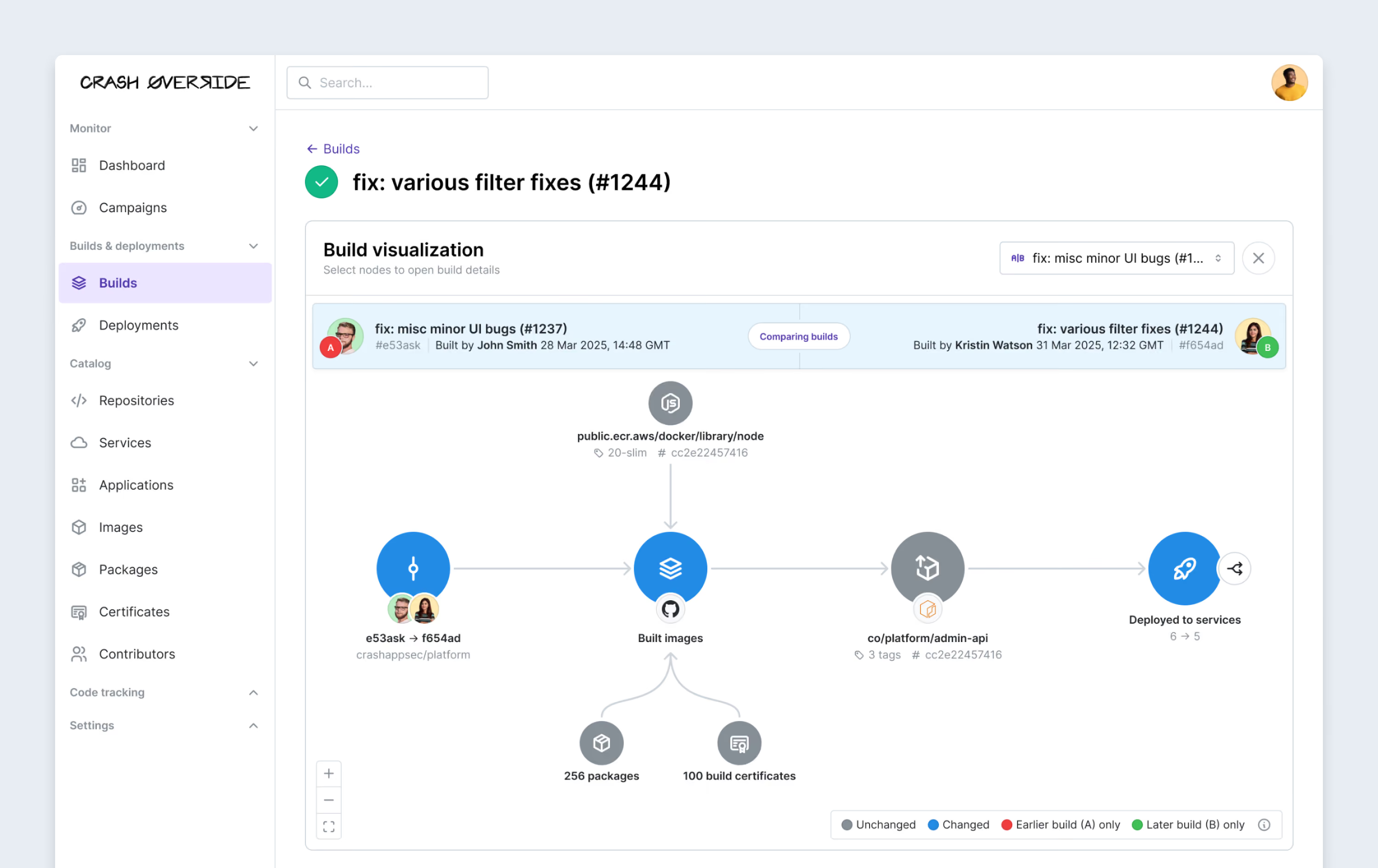
Side-by-side diff of two builds, highlighting changed source, built images, and a reduction from six to five deployed services.

Build data — Packages, certificates, secrets and other build details stay connected to lineage, making their path from build to runtime easy to trace.
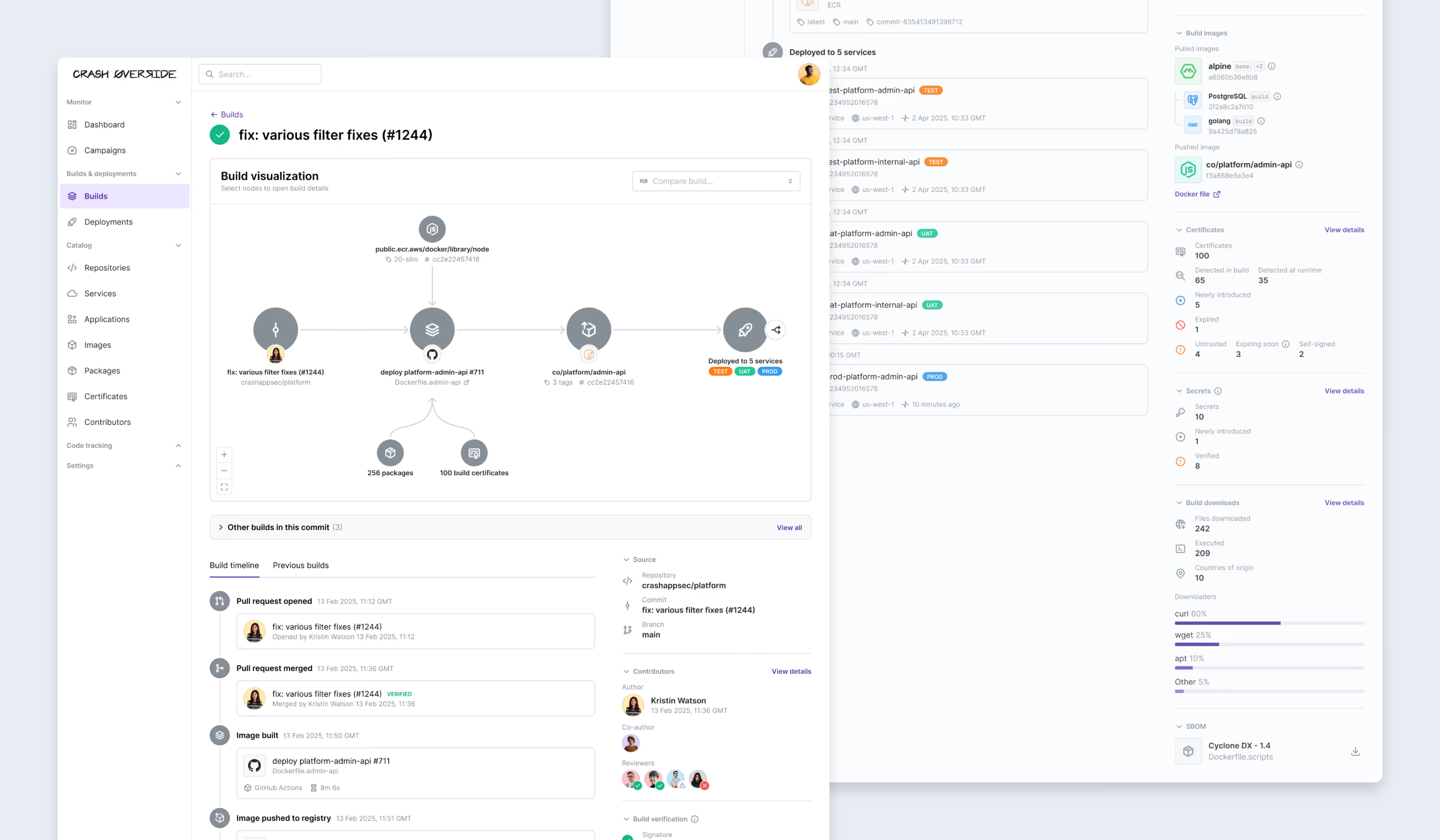
Detailed build page with a build timeline, deployment history, source details, contributor information, certificates, secrets, downloads, and SBOM summary.

Software catalogue — Connected repository, service, deployment and image views let users trace software from source to production — and back again.
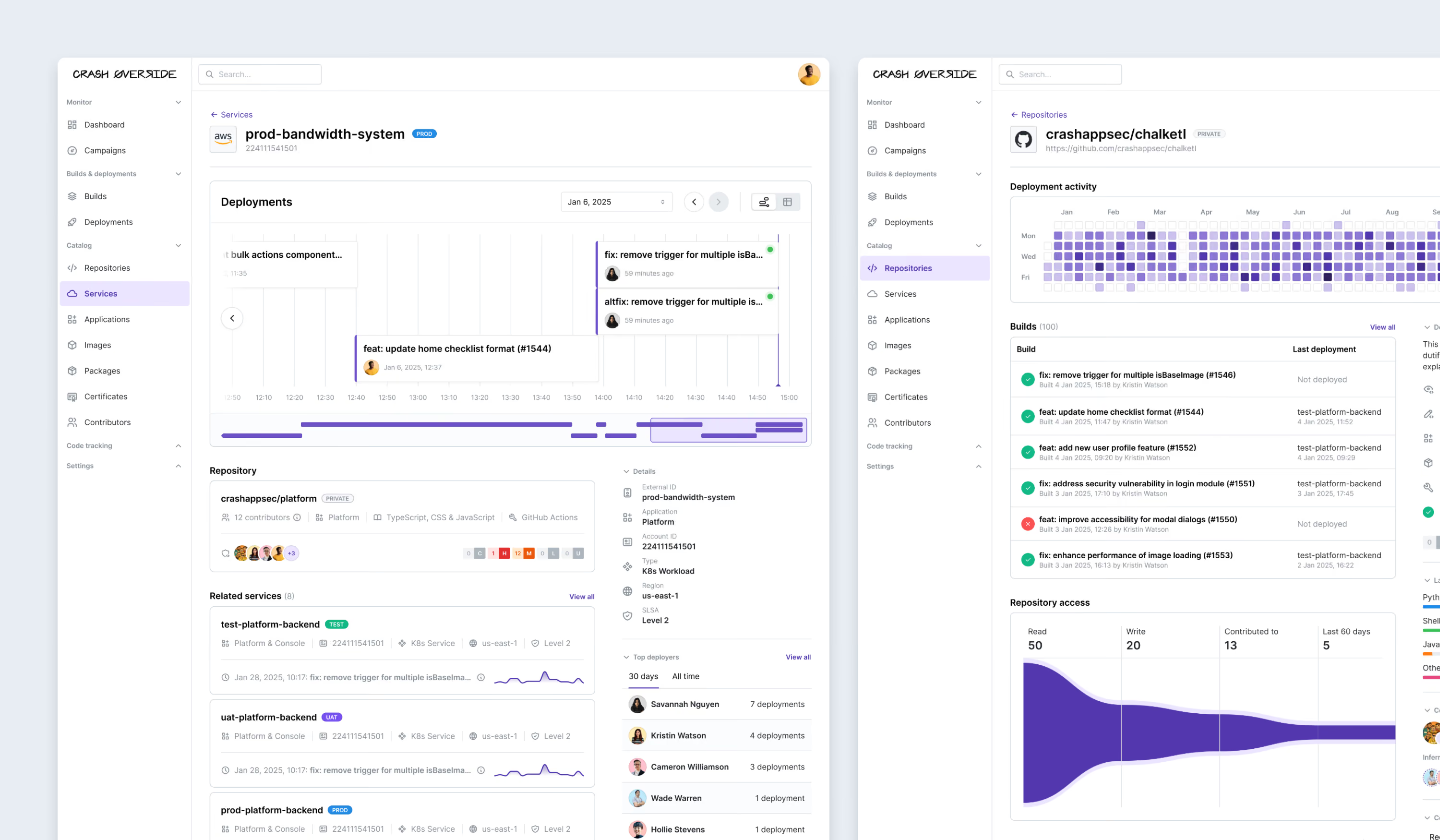
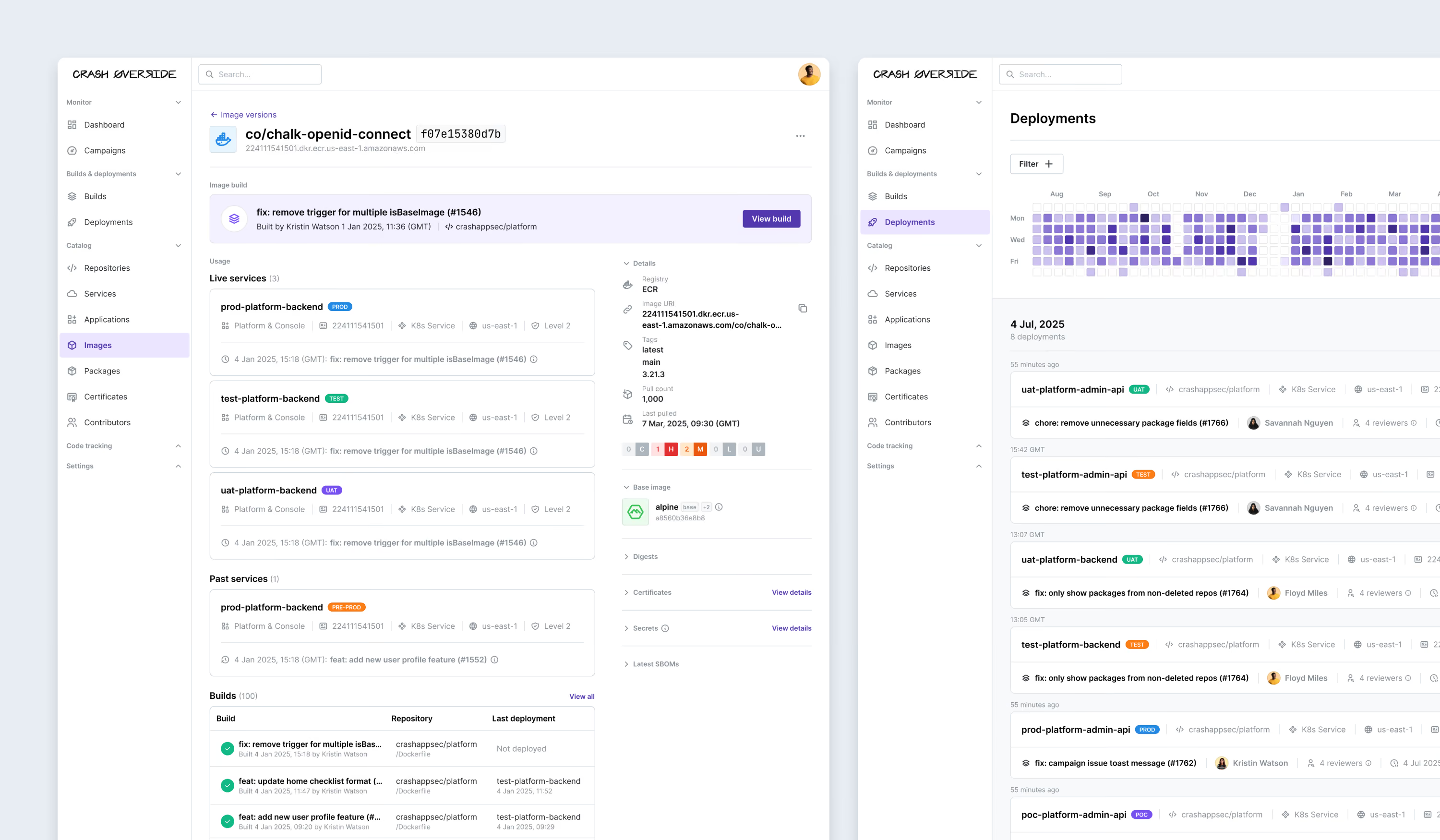
Crash Override service and repository detail pages, showing service deployment timeline and repository deployment activity.Image detail page showing live and past service usage beside a deployments page with an activity heatmap and deployment list.